
Tükenmek Üzere
Tükenmek Üzere
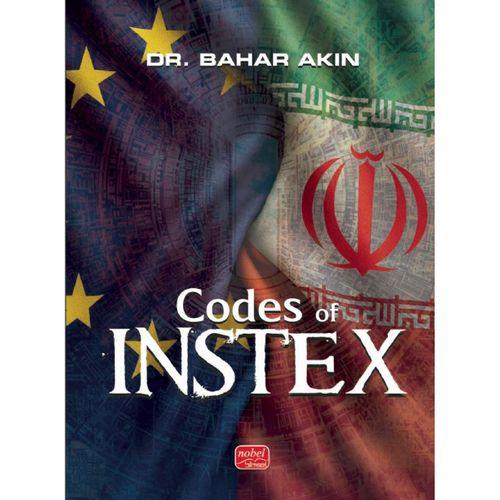
CODES OF INSTEX - A Multilateral Regime Initiative Against US Sanctions in the Context of the Iran Nuclear Dispute
CODES OF INSTEX - A Multilateral Regime Initiative Against US Sanctions in the Context of the Iran Nuclear Dispute
%
6
 Stok (1)
%100
Süper Kitap
Git
Ücretsiz Kargo
CODES OF INSTEX - A Multilateral Regime Initiative Against US Sanctions in the Context of the Iran Nuclear Dispute
CODES OF INSTEX - A Multilateral Regime Initiative Against US Sanctions in the Context of the Iran Nuclear Dispute
%
6
Kargo Fırsatı
150.00 TL ve Üzeri Siparişlere
Ücretsiz Kargo Fırsatı
Ücretsiz Kargo Fırsatı
Listeme Ekle
Kampanyalar
Stok (1)
%100
Süper Kitap This book examines a distinctive multilateral initiative developed in response to U.S. secondary sanctions amid the unresolved Iranian nuclear dispute. Although short-lived, INSTEX (Instrument in Support of Trade Exchanges) emerged as a regime-based attempt to navigate an increasingly politicized global financial order and to challenge the dominance of unilateral sanctions.
Drawing on regime theory, sanctions politics, and international political economy, the study analyzes the design, implementation, and failure of INSTEX as a case of institutional resistance. It explores to what extent INSTEX reflects the components of an international regime—principles, rules, norms, and decision-making procedures—and whether it can be considered a regime in its own right.
Furthermore, the book proposes a generalizable analytical model for operationalizing regime theory in international relations, offering a framework applicable to INSTEX-like mechanisms and similar institutional phenomena in the global order.
By situating INSTEX within the dynamics of the U.S.–Iran confrontation and the broader sanctions regime, this work provides fresh insights into nuclear diplomacy, multilateralism, and institutional innovation in international relations.
Drawing on regime theory, sanctions politics, and international political economy, the study analyzes the design, implementation, and failure of INSTEX as a case of institutional resistance. It explores to what extent INSTEX reflects the components of an international regime—principles, rules, norms, and decision-making procedures—and whether it can be considered a regime in its own right.
Furthermore, the book proposes a generalizable analytical model for operationalizing regime theory in international relations, offering a framework applicable to INSTEX-like mechanisms and similar institutional phenomena in the global order.
By situating INSTEX within the dynamics of the U.S.–Iran confrontation and the broader sanctions regime, this work provides fresh insights into nuclear diplomacy, multilateralism, and institutional innovation in international relations.
Tüm Yorumlar